 Eric's ramblings, experiences and random thoughts about e-Learning, distance education and Educational Technology.
The October 2010 issue of International Review of Research in Open and Distance Learning is out and what I like about this publication is that the full-text of the articles are completely open and accessible. You are not required to pay a membership fee for access. What is also interesting about this publication is that is does book reviews as well and in many cases it tries to choose books that are also completely open and accessible.
This issue has one particular book that is available in PDF format by a Creative Commons License: Accessible elements - Teaching science online and at a distance edited by Dietmar Kennpohl and Lawton Shaw of Athabasca University.
It is a topic near and dear to my heart because I teach post-secondary science courses in class and at a distance. I have written some blog posts in the past relating to this subject (here, here, here).
This online book is fantastic and covers several important issues: the student-centered aspects of learning science at a distance; hands-on laboratories at a distance whether they be ‘kitchen chemistry’ or remote control labs, or anything in between; the institutional logistics of offering science programs at a distance. This is all fantastic and relevant material to colleges and universities today.
If you get a chance to look at this document, let us know what you think about the subject by posting a comment below.
Showing posts with label science. Show all posts
Showing posts with label science. Show all posts
Monday, October 18, 2010


Thursday, July 16, 2009
From World of Warcraft to Second Life – Teaching Science with Immersion and Excursion
I recently attended the SLOAN-C International Symposium on Emerging Technology Applications for Online Learning in San Francisco. It was an intense conference with many fantastic talks. One particularly interesting talk was done by Mary Anne Clark, a Professor of Biology at Wesleyan University in Texas. She started her talk by telling us a story. (As an aside, I personally love talks that start with a story because I really value the learning that can come from storytelling.)
 She told a story of an experience she had a few years prior where her husband had been pretty involved in playing the world’s most popular Massively Multiplayer Online Role Playing Game(MMORPG)called World of Warcraft (WoW). If you haven’t heard about the success of WoW then all you need to know is that over 11 million people pay a monthly subscription to play this online game - the revenue is astounding and it speaks to the quality of the game experience! Mary Anne’s husband would constantly try to convince her to play WoW with him. As a non-game player, Mary Anne could not really understand the appeal of the game. For example, one week she would come into the computer room and her husband would be playing the game. His character in the game would be in the middle of a quest busily fighting wolves for example. Then she would come into the computer room a week or two later and her husband’s character in the game would be still doing similar things – only this time he was fighting bigger wolves. The attraction to the game for her was not clear. However, after some time she finally got tired of his pleading and made him an offer he couldn’t refuse: she would play WoW with him for the summer when she wasn’t teaching. It didn’t take long for Mary Anne to finally understand the attraction of WoW once she started playing. She describes it “an immersive experience” where you begin to feel like the character you are playing in the game is an extension of yourself. WoW challenges players to make their characters perform heroic acts, great feats of courage, and overcome challenging tasks in the game and you can do all these things by yourself or with the assistance and collaboration of other game players. The social interaction between players while playing WoW is a very interesting and engaging facet of the game. In fact, the entire experience of playing the game is a very large exercise in learning. As a player, you have to learn the etiquette of WoW, you have to learn how to complete tasks, learn how to improve your character’s skills, learn how to interact with other players, learn how to make money to outfit your character’s needs, learn about the monsters you will be combating, etc. All the while, you receive immediate feedback from the game in the form of virtual currency, precious items and even the enhancement of your “in-game” reputation among other players – all highly motivating features that encourage game players to continue playing.
After some time, Mary Anne realized that with so much learning going on by WoW players, wouldn’t it be convenient and spectacular if WoW could be used as a teaching tool in her academic field. Unfortunately, her academic field was not “Monsters”!
That’s when she turned to a different virtual world product: Second Life. I’ve written about Second Life a few times before on this blog (here and here).
 Mary Anne began developing what would become today Genome Island. This location in Second Life now hosts many learning objects and activities that augment introductory courses in genetics and biology. Much like WoW, students create a virtual character in Second Life and with this character they can personally interact with objects and perform the learning activities that Mary Anne has created. They can conduct virtual experiments and collect the data that they produce. Consequently, after conducting the experiments, students can summarize the data in a convenient way (such as an excel spreadsheet or a word document), compare it with their classmates and analyze their findings in a real-world lab report.
Genome Island is segmented into four main sections. The Abbey and Gardens deal with experiments and concepts about genetic inheritance patterns. The Tower has learning activities relating to human, bacterial and Drosophila genetics as well as molecular biology. The Gene Pool is still under development and will have models for population genetics. The Terrace overlooks several exhibits demonstrating animal models, etc. Lastly, the Atelier is the ‘sandbox’ for Mary Anne herself where you can occasionally watch her (or her colleagues) in the process of building new learning activities for Genome Island.
Mary Anne has successfully used Genome Island two major ways to enhance learning in her genetics courses. The first, excursion, is simply to demonstrate live in a face-to-face classroom of students some learning objects on Genome Island using her Second Life character. The second, immersion, is to have students create their own characters in Second Life and perform the tasks themselves either in a computer lab or at their home. Both the immersion and the excursion methods have their own pros and cons, and both can be used successfully from a student point of view. Student feedback clearly supports this. For example, some students commented:
 The power of virtual world immersion and excursions when applied to a learning context is clear. The challenge is ensuring good instructional design is in place so that students can move past the technical requirements or novelty of using the virtual world software and clearly focus their time on the well-crafted learning activities that these worlds can host.
Genome Island is publicly accessible in Second Life. So by creating a free Second Life account and by creating your own virtual character, you can go check out all the learning going on for yourself. While you are on the island, be sure to say ‘hi’ to the character "Max Chatnoir" if you can find her - that’s Mary Anne herself!
Do you use Second Life (or World of Warcraft?) in your teaching? If so, tell us your experience by leaving a comment below.
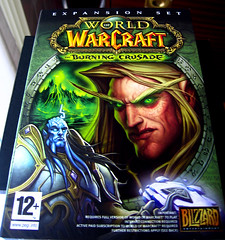 She told a story of an experience she had a few years prior where her husband had been pretty involved in playing the world’s most popular Massively Multiplayer Online Role Playing Game(MMORPG)called World of Warcraft (WoW). If you haven’t heard about the success of WoW then all you need to know is that over 11 million people pay a monthly subscription to play this online game - the revenue is astounding and it speaks to the quality of the game experience! Mary Anne’s husband would constantly try to convince her to play WoW with him. As a non-game player, Mary Anne could not really understand the appeal of the game. For example, one week she would come into the computer room and her husband would be playing the game. His character in the game would be in the middle of a quest busily fighting wolves for example. Then she would come into the computer room a week or two later and her husband’s character in the game would be still doing similar things – only this time he was fighting bigger wolves. The attraction to the game for her was not clear. However, after some time she finally got tired of his pleading and made him an offer he couldn’t refuse: she would play WoW with him for the summer when she wasn’t teaching. It didn’t take long for Mary Anne to finally understand the attraction of WoW once she started playing. She describes it “an immersive experience” where you begin to feel like the character you are playing in the game is an extension of yourself. WoW challenges players to make their characters perform heroic acts, great feats of courage, and overcome challenging tasks in the game and you can do all these things by yourself or with the assistance and collaboration of other game players. The social interaction between players while playing WoW is a very interesting and engaging facet of the game. In fact, the entire experience of playing the game is a very large exercise in learning. As a player, you have to learn the etiquette of WoW, you have to learn how to complete tasks, learn how to improve your character’s skills, learn how to interact with other players, learn how to make money to outfit your character’s needs, learn about the monsters you will be combating, etc. All the while, you receive immediate feedback from the game in the form of virtual currency, precious items and even the enhancement of your “in-game” reputation among other players – all highly motivating features that encourage game players to continue playing.
After some time, Mary Anne realized that with so much learning going on by WoW players, wouldn’t it be convenient and spectacular if WoW could be used as a teaching tool in her academic field. Unfortunately, her academic field was not “Monsters”!
That’s when she turned to a different virtual world product: Second Life. I’ve written about Second Life a few times before on this blog (here and here).
 Mary Anne began developing what would become today Genome Island. This location in Second Life now hosts many learning objects and activities that augment introductory courses in genetics and biology. Much like WoW, students create a virtual character in Second Life and with this character they can personally interact with objects and perform the learning activities that Mary Anne has created. They can conduct virtual experiments and collect the data that they produce. Consequently, after conducting the experiments, students can summarize the data in a convenient way (such as an excel spreadsheet or a word document), compare it with their classmates and analyze their findings in a real-world lab report.
Genome Island is segmented into four main sections. The Abbey and Gardens deal with experiments and concepts about genetic inheritance patterns. The Tower has learning activities relating to human, bacterial and Drosophila genetics as well as molecular biology. The Gene Pool is still under development and will have models for population genetics. The Terrace overlooks several exhibits demonstrating animal models, etc. Lastly, the Atelier is the ‘sandbox’ for Mary Anne herself where you can occasionally watch her (or her colleagues) in the process of building new learning activities for Genome Island.
Mary Anne has successfully used Genome Island two major ways to enhance learning in her genetics courses. The first, excursion, is simply to demonstrate live in a face-to-face classroom of students some learning objects on Genome Island using her Second Life character. The second, immersion, is to have students create their own characters in Second Life and perform the tasks themselves either in a computer lab or at their home. Both the immersion and the excursion methods have their own pros and cons, and both can be used successfully from a student point of view. Student feedback clearly supports this. For example, some students commented:
"The Second Life made activities more hands on, and while we did a lot of reading it never seemed like it."
"I love the fact that it is REALLY hands on. It isn’t like sitting in a lecture class, you really end up enjoying all that you are learning and it really makes you want to learn MORE."
"By the way this is awesome! I've never done anything like this in relation to science, let alone had this much fun!"
 The power of virtual world immersion and excursions when applied to a learning context is clear. The challenge is ensuring good instructional design is in place so that students can move past the technical requirements or novelty of using the virtual world software and clearly focus their time on the well-crafted learning activities that these worlds can host.
Genome Island is publicly accessible in Second Life. So by creating a free Second Life account and by creating your own virtual character, you can go check out all the learning going on for yourself. While you are on the island, be sure to say ‘hi’ to the character "Max Chatnoir" if you can find her - that’s Mary Anne herself!
Do you use Second Life (or World of Warcraft?) in your teaching? If so, tell us your experience by leaving a comment below.
Monday, February 09, 2009
Chemistry Labs at a Distance: the Kitchen takes Centre Stage!
Over the last decade, more and more schools have offered a larger proportion of their curriculum in a distance delivery format. This is largely due to technical advances that have afforded more bandwidth, less expensive course development tools, and adoption of learning management systems at most schools. It is also important to acknowledge that demand by students has also fueled the increase in distance education offerings. I work at the Royal Military College of Canada - Canada’s only military University. We have more students taking distance course offerings than we have students taking classroom courses. Interesting isn’t it!

One interesting observation that I make when I examine our course offerings, is that the large majority of our distance courses are humanities-based. The science courses are few and far between. The largest barrier to completing a science degree via distance is the completion of laboratory components. This is true in many online colleges and universities. It’s far easier to offer science labs in a residential setting than it is to offer then by distance. Despite the challenge, it doesn’t mean it’s impossible. Consider an introductory chemistry course for a moment. In my view, there are basically four possible options available to course designers:
Each of the four options above has its pros and cons. I won’t outline them all here (maybe I will save them for a future blog post. Hee hee!). However, I wanted to take this opportunity to share with you one resource that I found on the topic of kitchen science for chemistry labs. Doris Kimbrough of the University of Colorado at Denver and Jim Reeves of the University of North Carolina at Wimington have shared several examples of kitchen chemistry in action. Specifically, they share three different packages of distance learning laboratories, dubbed the 'Anytime Anywhere Chemistry Experience', for us to examine:
Each experiment in these packages is designed with learning objectives, a list of equipments and materials that the student must purchase, an introduction that contains the theory behind the experiment, a detailed procedure, and a series of questions that need to be answered. (Sometimes, an excel sheet is provided for students to type their data directly into.)
Do you have any experience in offering science labs at a distance? If so, let us know about it by leaving a comment.

One interesting observation that I make when I examine our course offerings, is that the large majority of our distance courses are humanities-based. The science courses are few and far between. The largest barrier to completing a science degree via distance is the completion of laboratory components. This is true in many online colleges and universities. It’s far easier to offer science labs in a residential setting than it is to offer then by distance. Despite the challenge, it doesn’t mean it’s impossible. Consider an introductory chemistry course for a moment. In my view, there are basically four possible options available to course designers:
- Construct a condensed residential lab offered in the summer. Distance students can travel to the university for 1 or 2 weeks and complete a series of experiments at an accelerated pace. Note that arrangements could be made to deliver this condensed laboratory at the closest college or university if the student resides a prohibitive distance from the hosting university.
- At home labs using a prepared lab kit. The course development team can prepare a kit that contains volumetric glassware, pH testing equipment, small quantities of known salts and chemicals, etc. This kit can provide stand-alone equipment for students to perform experiments at home.
- At home labs using kitchen science. The course development team can design experiments that include equipment and materials that students either have in their home already or can easily purchase locally.
- Computer laboratory simulations. In recent years, some companies have come out with relatively inexpensive computer simulation packages that can be used to simulate laboratory experiments on a computer.
Each of the four options above has its pros and cons. I won’t outline them all here (maybe I will save them for a future blog post. Hee hee!). However, I wanted to take this opportunity to share with you one resource that I found on the topic of kitchen science for chemistry labs. Doris Kimbrough of the University of Colorado at Denver and Jim Reeves of the University of North Carolina at Wimington have shared several examples of kitchen chemistry in action. Specifically, they share three different packages of distance learning laboratories, dubbed the 'Anytime Anywhere Chemistry Experience', for us to examine:
- Web-based materials for Science Majors (10 experiments)
- Text-based materials for Science Majors (9 experiments)
- Text-based materials for Non-science Majors (9 experiments)
Each experiment in these packages is designed with learning objectives, a list of equipments and materials that the student must purchase, an introduction that contains the theory behind the experiment, a detailed procedure, and a series of questions that need to be answered. (Sometimes, an excel sheet is provided for students to type their data directly into.)
Do you have any experience in offering science labs at a distance? If so, let us know about it by leaving a comment.
Subscribe to:
Posts (Atom)


